
Solar Battery Storage Henderson
Solar battery storage Henderson NV homeowners ask about is a separate piece of the home energy system, not a feature that comes with every rooftop array. A battery stores energy in kilowatt-hours and releases it at a limited kilowatt rate. Those two numbers decide which circuits can stay on, and for how long, if the design is built for backup at all. Panels alone do not keep a standard grid-tied home running when the utility is down.
Call (702) 508-6441 to discuss solar battery storage for your Henderson home.
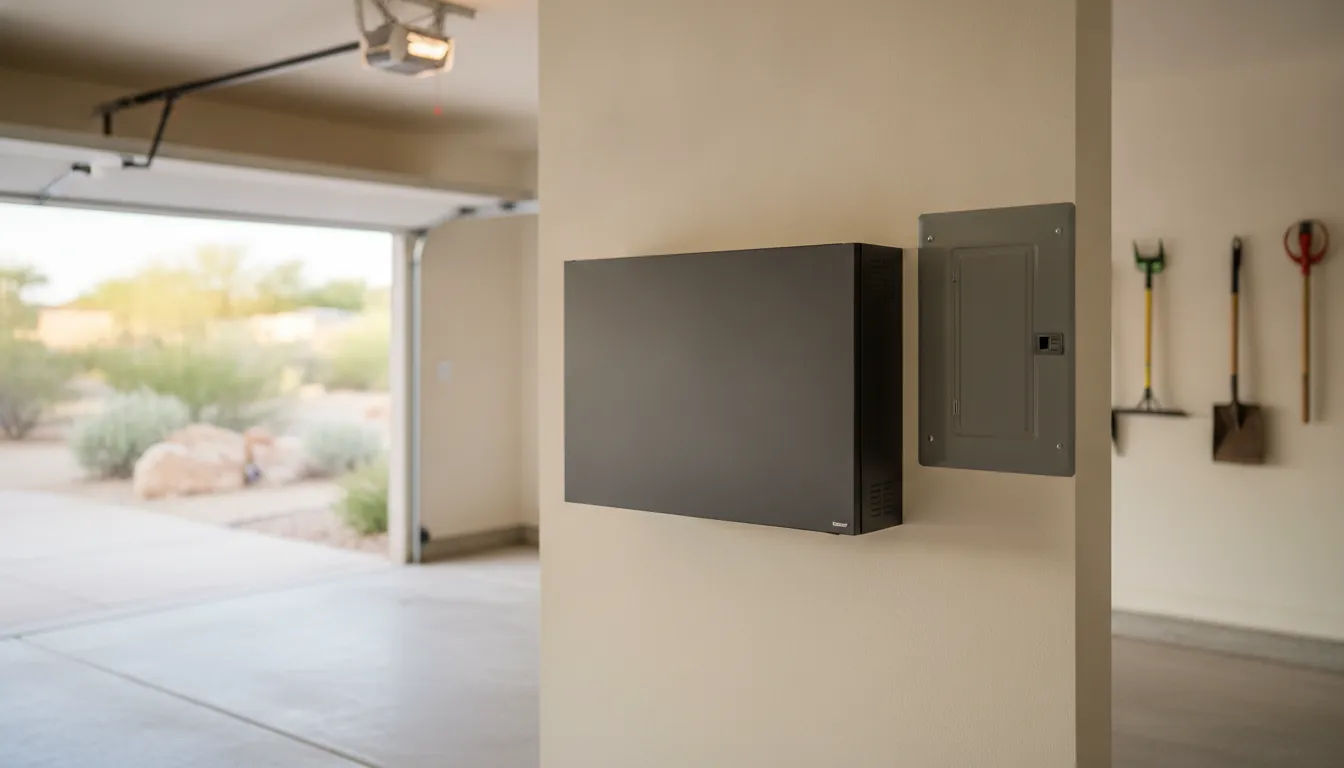
LivSmart designs storage for a specific Henderson or nearby Clark County home after a measured review. This guide covers who may benefit, how capacity differs from power, which loads a design can support, and what that local assessment checks. It does not quote a price, a runtime, or a warranty. Those bind only in the signed project scope for the equipment you select.
Who solar battery storage Henderson NV may help
Storage is worth a serious look when the goal is a defined backup. A vague wish to "have power" is not enough. Homes that lose the fridge, the garage door, or a home office in short outages often want a battery. Homes that only want a lower daytime bill may not. Solar by itself is not outage backup. A battery is a separate configuration. It only covers the circuits the design actually connects.
A second group is homeowners who already have panels, or who are planning them, and want evening use of midday production. Whether that also lowers a bill depends on the rate schedule, the battery settings, and how the home uses energy. Do not treat storage as automatic savings. Zero-down financing, leases, and power-purchase agreements are eligibility-dependent, and approval is never guaranteed.
A third group wants the battery to work with the rest of the house, not as a standalone gadget. LivSmart installs rooftop solar, backup batteries, security and automation, and permanent roofline lighting as one local design. Storage still has its own electrical path. It is not the same product as a security system or as lighting.
Storage is a weaker fit when the only question is the lowest equipment price, or when the home needs every load, including central air, through a long summer outage. Central air is a large continuous and startup load. Many designs leave it off the backup panel on purpose. If whole-home coverage is the requirement, say that at the consult so the review can test whether the service, the space, and the budget can support it. Some homes will not.
How capacity and power differ on a home battery
Capacity and power answer different questions. Mixing them up is how a system looks large on paper and still trips. The air handler or the well pump is often what trips it. The U.S. Department of Energy's battery storage specifications define power as the charge or discharge rate in kilowatts. They define energy as the amount stored in kilowatt-hours.
Think of capacity as the size of the tank and power as the width of the hose. A battery can hold many hours of a small load and still be unable to start one large motor. The reverse is also true. A high power rating does not mean the battery can run that load all night.
| Term | What it measures | What it decides for your home |
|---|---|---|
| Energy capacity (kWh). | How much energy the system can store, as rated by the manufacturer. | How long a chosen set of loads might run, before reserve and losses. |
| Usable energy. | The share of nameplate capacity the settings actually allow you to use. | The real tank size after reserve, not the brochure number. |
| Continuous power (kW). | The steady rate the battery can supply. | Whether several essential loads can run together. |
| Surge or startup power. | A short higher rate some equipment can deliver. | Whether a motor or compressor can start at all. |
NV Energy's interconnection handbook uses the same capacity idea. Energy capacity is the maximum energy, in kilowatt-hours, that a storage system can store as rated by the manufacturer. Two batteries rated at 5 kWh each are a 10 kWh nameplate system. That sum is not a promise of 10 hours of whole-home power. Usable energy is often lower than the nameplate because the system keeps a reserve, and because heat, age, and the chosen settings change what you can draw. The signed design should name both the nameplate and the usable figure for the equipment you select.
Duration is only a planning ratio, not a guarantee. Divide usable kilowatt-hours by the kilowatts the backed-up loads actually draw. A small essential-load panel can last much longer than a panel that includes large appliances. LivSmart will not publish a fixed backup runtime, because the real number depends on the battery, the loads, the weather, and how full the battery was when the outage started.
Which loads a Henderson storage design can support
A useful design starts from a load list, not from a battery model. During the assessment, you and the designer mark what must stay on, what is nice to have, and what should stay off the backup path. That list is what the capacity and power ratings have to match.
Essential loads that often fit a partial-home design include a refrigerator and a small freezer, if their running and startup watts fit the power rating. A few lighting circuits, internet, and phone charging usually fit as well. A garage door opener is a short burst, not a constant load. A medical device belongs on the list only after its wattage, runtime need, and alarm behavior are measured. Select outlets for a home office can be included. Every room in the house should not be assumed.
Loads that often need a larger design, or that may be left off backup, include central air conditioning, an electric range, an electric dryer, a pool pump, and an electric water heater. Each of those can exceed the continuous power of a single home battery even when the kilowatt-hour rating looks generous. Adding batteries increases stored energy. It does not automatically increase the power the inverter can push.
If you want the detail on why a standard grid-tied array shuts off in an outage, read what to expect from solar panels during a power outage. This article stays on storage sizing and the local review, not on anti-islanding.
Backup behavior also depends on how the battery is coupled to the home. Some systems use a backup subpanel and move chosen breakers onto it. Others can be set for a broader backup if the service and the equipment allow it. Either way, the circuits on the backup path should be listed in the scope. A neighbor's setup is not evidence that yours will do the same thing.
What a local solar battery assessment checks
A Henderson assessment is a site review, not a catalog order. LivSmart looks at the home, the existing equipment, and the loads you care about before anyone names a battery count. You can see how the company frames storage on the energy management page, then use the consult to test those ideas against your panel and your outage goals.
The review typically starts with the service and the panel. The main panel, the available breaker space, and the utility service size decide whether a battery and a backup subpanel can be added cleanly.
Existing solar is the next check, if the home already has it. Panel rating, inverter type, and remaining roof or electrical capacity change whether storage is paired now or planned with a new array. The Henderson solar panel installation guide covers the rooftop path. Storage adds its own equipment and its own interconnection review.
Then you name the circuits that matter. The designer compares their running and startup watts with candidate power ratings. The same pass checks whether usable capacity covers the outage length you care about.
Location and clearance come after the load list. Batteries need a code-compliant spot, often a garage wall, with the clearances and ventilation the equipment and the local jurisdiction require. Not every garage wall qualifies.
The last check is the utility and permit path. NV Energy requires interconnection of paired renewable and storage systems by a Nevada-licensed contractor, with a local final inspection. The application is separate from the sales conversation. Our NV Energy solar interconnection process article covers that sequence. Do not assume a battery can be switched on the day it is mounted.
Bring a recent NV Energy bill, a list of must-run devices, and any notes about medical equipment or a home office. If you already have solar, the monitoring login or the original one-line drawing helps. You do not need to pick a brand before the visit. The output of a good assessment is a proposed load list, a capacity and power range that can serve it, and a written scope. Price, schedule, warranty, and cancellation terms belong in that agreement, not in a blog post.
How Henderson homes use storage after it is installed
Once the system is approved to operate, the battery follows the settings in the design. In an outage, it should island the backed-up loads and stop sending power to the grid. On a normal day, it may hold a reserve for backup, charge from the array, or shift some energy into the evening. Those modes are choices. A setting that spends the whole battery before sunset will not be there for a nighttime outage.
Summer heat in the valley is part of the design, not a footnote. Batteries have operating temperature limits, and usable output can drop when the equipment is hot or when the reserve is set high. That is another reason LivSmart will not promise a specific runtime or full-home coverage. The monitoring view should show state of charge and which mode is active, so you can see whether the reserve you asked for is actually being held.
Storage also does not replace the rest of the energy picture. Net metering, rate choice, and how much the array produces are separate from the battery's backup job. If bill savings are a goal, ask the designer to model them from your usage and the selected equipment, and treat the result as an estimate. Immediate savings are not something this page can promise.
What to confirm before you sign a storage scope
Read the proposal for the decisions this article has been circling. The useful lines are specific. Vague lines such as "whole home backup" or "hours of power" should be rewritten as circuits, kilowatt-hours, and kilowatts before you sign.
Confirm the nameplate capacity and the usable kilowatt-hours the design will count on. Confirm continuous power and any startup limit, in kilowatts. The scope should name the exact circuits on the backup path and the loads that are excluded. It should also name where the battery will sit, and which permit and interconnection steps remain. Warranty length, and what it covers, should be written for that equipment. Ask whether monitoring, a reserve setpoint, and any service visit are included or billed separately.
Nevada contractor license statements and marketing claims are not a substitute for that scope. LivSmart's published license number is a company statement, not a checked board printout inside this article. Ask for the license on the agreement if you want it in the record of your project.
If you want a measured read on your panel and your must-run loads, schedule a Henderson storage consultation or call (702) 508-6441.
FAQs
Do solar panels in Henderson work during a power outage without a battery?
No. A standard grid-tied system shuts off when the grid is down so it does not energize a line crews may be repairing. Outage backup requires a battery and the switching equipment the design specifies. Panels alone are not that system.
Is a bigger kilowatt-hour rating the same as whole-home backup?
No. Kilowatt-hours describe stored energy. Whole-home backup also depends on continuous power, startup power, panel space, and which loads you insist on running together. A large tank behind a narrow inverter still cannot start every motor in the house.
Can one battery run central air conditioning through a summer outage?
Sometimes a design can include air conditioning, and often it should not. Central air draws a high running load and a higher startup surge. Coverage is possible only when the selected equipment's power rating and the usable energy both match that load. It is never a default.
Will solar battery storage cut my NV Energy bill by a set amount?
There is no set amount. Any shift onto evening hours or any backup reserve depends on your rate, your usage, and the settings. Ask for an estimate tied to your bill. Do not treat a neighbor's savings, or a tax credit headline, as your result.
How do I start a LivSmart storage assessment?
Request a free consultation and bring a recent bill plus your list of must-run loads. LivSmart will review the panel, the space, and any existing solar, then propose a scope. Price, warranty, and backup performance stay in that signed agreement.
Call (702) 508-6441 to discuss a Henderson solar battery storage assessment.

